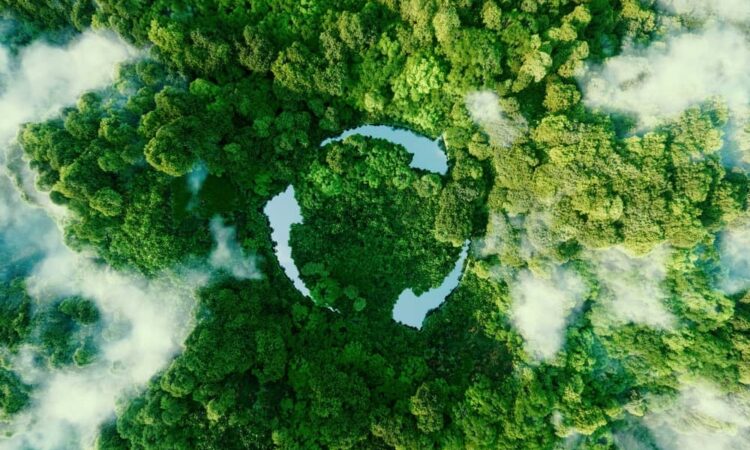
Forests are important carbon sinks, which is to say, they naturally remove carbon dioxide from the air. Trees absorb and store carbon, and vibrant forests maintain fresher air, help purify water and sustain innumerable species of flora and fauna. Some countries that have planted trees offset as much as a third of their fossil emissions annually since 2012. Forests aren’t an uncomplicated magic bullet for global emissions, and they can’t be used in isolation.
The carbon uptake of forests is orders of magnitude smaller than the scale of emissions from fossil fuel giants. For instance, a single oil giant can emit billions of metric tons of CO2 annually. In contrast, even the largest reforestation projects sequester just a fraction of those emissions. While scientists report that Earth could sustain 900 million additional hectares of forest—roughly 25% more than what exists today—this still wouldn’t be sufficient to offset all human emissions were they to continue unabated.
Physical limitations make it clear why forests alone cannot offset our carbon footprint:
- Land availability: To offset all current global carbon emissions with trees, we would need to cover vast land areas—comparable to the size of the United States, or even larger. Most of these lands, however, are already used for food crops, cities, or are otherwise not viable for forest.
- Biodiversity and land use conflict: Planting trees on such a grand scale can threaten food production and local ecosystems, especially if it means replacing grasslands or wetlands that store carbon and support wildlife.
- Nutrient demands: As carbon dioxide in the air goes up, trees need more nutrients—like nitrogen and phosphorus—to keep growing well. These nutrients aren’t always there, which means that many new forests may not grow as quickly or sequester as much carbon as intended.
- Deforestation: In some regions, especially the tropics, forests are being cut down to clear land for farming or development. Such deforestation negates reforestation gains and may actually emit exceed the carbon being sequestered.
- Climate effects and permanence: Forests can cool or warm the Earth based on changes in reflectivity (albedo) and water cycling. Fires, disease or logging all put stored carbon’s permanence at risk.
Forests can be a cheap and effective weapon in the climate fight, but need to be additional — planting new trees, not just protecting old ones — permanent — carbon just as locked away — and non-leaking — not displacing emissions. These are difficult to ensure, particularly in regions where forest governance is poor.
Cutting emissions at the source—using less fossil fuel and transitioning to cleaner energy—is still the best way to reduce our impact. Forests to the rescue, but as one tool in your toolkit, not the magic bullet.
Protecting forests versus planting new trees
Preserving forests and planting trees are both carbon offsets, but their effects and risks vary widely. Mature forests are some of the world’s most dependable carbon sinks. They sequester vast quantities of carbon in their trunks, soils and roots. Old-growth forests provide habitats to numerous flora and fauna. This biodiversity assists forests in remaining healthy and resilient to damage—something younger forests or plantations are not as good at doing. Take the rainforests of the Amazon, Congo Basin or Southeast Asia, for instance — natural strongholds for both carbon and species. When these regions are cut down, sequestered carbon is released, but essential habitats are lost as well.
As several ecologists highlight, planting trees is promoted as a silver bullet, but the truth is far more nuanced. For others, the solution is complicated — since trees used as easy answers can divert attention from the tough effort required to repair entire landscapes. Although planting trees is catchy, it’s not always durable. Take Chile, for instance — government subsidies since the 1970s have motivated private landowners to sow seeds, but this has sometimes come at the expense of native forests, with a shift toward monoculture plantations. Such plantations may sequester some carbon, but provide minimal benefit for biodiversity and can result in local plant extinction. Likewise, a study from Costa Rica discovered that half of its second growth forests were felled within 20 years. These examples demonstrate that, without sustainable protection or planning, tree planting can squander time and resources.
It’s not always helpful: large-scale tree-planting projects can alter natural ecosystems. Planting trees on grasslands or savannas that already sequester carbon underground can disturb local water cycles and inhibit the land’s capacity to sustain its indigenous wildlife. In certain places, such shifts might even reduce the location’s total carbon storage. So although extending forest area removes carbon from the atmosphere, new plantings still need to be planned carefully. Selecting appropriate tree species, aligning plantings with local environmental conditions, and ensuring the longevity of reforestation projects over decades remain crucial components.
Policymakers walk a fine line. While incentives can encourage more landowners to plant trees, these need to be combined with robust regulation to safeguard existing forests and prevent new projects from damaging biodiversity. Among lots of countries, there’s broad political support for tree planting, but social and economic risks persist. For example, there are approximately 900 million hectares globally that could be reforested or afforested. If done well, this could help contain climate change. The work has to be place-specific and supported by initiatives to conserve forests for the long term.
Types of forest-based carbon offsets
Forest-based carbon offsets remain an important mechanism for combatting climate change. They do so by asserting to prevent or eliminate a metric ton of CO2e via various forest-related initiatives. These offsets originate from initiatives such as Improved Forest Management (IFM), REDD+, and afforestation / reforestation. Each has its own techniques, advantages and constraints in planetary and carbon efficacy.
Avoided deforestation is the prevention of forest loss. It’s the fundamental premise of REDD+ projects, which seek to prevent deforestation or degradation, particularly in vulnerable forests. Improved Forest Management (IFM) falls in this category as well, and these projects account for the majority of forest offset credits in the U.S.—approximately 94%. These preserve carbon in trees that would be lost if forests were cut down. Carbon from such projects can be measured with satellite tools like LiDAR or by verifying the dry weight of the trees.
Afforestation refers to the establishment of forests in areas that previously did not have any, such as on barren terrain. Reforestation focuses on replanting trees in deforested lands. Both establish new carbon sinks by cultivating new trees, which sequester carbon through growth. These projects are frequently located in previously logged or farmed areas, breathing new life into exhausted terrain.
All three methods have pros and cons. When you consider permanence (how long carbon stays in the trees), additionality (if the project does something new versus something that would have happened anyway), and ecological impact (how the project impacts the immediate local environment), the picture gets complicated.
Avoided Deforestation (REDD+, IFM)
- Benefits:. * Keeps carbon stored in old forests. * Conserves habitats and biodiversity. * May help local people to keep their land
- Drawbacks:. * Risk of logging moving to other areas (leakage).* Difficult to demonstrate deforestation would have occurred otherwise (additionality). * Threat from fire, pests, or policy change (longevity)
Afforestation
- Benefits:. * Turns empty land into a carbon sink. Can restore soil and water systems. * Adds green space
- Drawbacks:. * Takes decades to store much carbon (slow start).* Could use land required for food or for wildlife. * New forests are often less diverse than old ones.
Reforestation
- Benefits:.* Recreates lost forests and protects wildlife. * Can combat erosion and enhance soil. * Sequesters carbon over time
- Drawbacks:.* Risk of monoculture (less biodiversit). * Requires nurturing and long-term monitoring. * Carbon loss if cut or burned
No one solution is sufficient. Taking a blended approach, such as combining avoided deforestation, afforestation, and reforestation, can provide more consistent, long-term impact. This ensures carbon remains sequestered, forests remain resilient, and the impact benefits both communities and ecosystems.
Measuring and verifying carbon sequestration
Measuring forests’ carbon storage is key to understanding if we can really rely on them to offset our carbon emissions. Forests worldwide absorb approximately 7.6 billion metric tons of CO₂ annually, constituting a significant portion of the mitigation against climate change. To ensure these figures are legitimate, durable, and verifiable, rigorous verification is necessary. Independent audits and third-party groups often come in to confirm that forest carbon offset projects can actually keep that carbon locked away. This is crucial because as much as 87% of credits transacted in voluntary markets may miss, not providing unambiguous climate impact. That implies sequestration needs to be measured and verified in a transparent, equitable fashion that’s amenable to external auditing.
There are a few main ways experts measure how much carbon is in a forest and how much more it can take in:
- Plot Sampling: People pick certain spots in a forest and measure the trees—how tall they are, how thick their trunks are. This provides an intimate view of the amount of carbon sequestered in those trees. The data from these plots is then used to estimate how much carbon is in larger areas.
- Remote Sensing: Satellite images or drones can scan wide stretches of forest. These tools speed and cut the cost of verifying how much forest cover exists, detecting changes and gauging carbon stores. These approaches still need ground truth to see if the figures really do add up.
- Allometric Equations: These math formulas help turn simple measures like trunk size into solid estimates of carbon stored, based on studies done all over the world.
- Soil Sampling: Since a lot of carbon in forests is locked in soil, taking soil samples helps get a better picture of whole-ecosystem storage.
All method have advantages and constraints. Forest type, land use, and damage from fires or illicit logging all contribute risk, making it difficult to predict if carbon will remain stored. For a carbon project to be considered permanent, the carbon must remain sequestered for a minimum of 100 years. Storms, pests or an economic shift can alter that in a heartbeat. To help support these long-term commitments, pooled reserves — sometimes referred to as permanence funds — can provide a cushion, so if one project falls short, there’s still a safety net.
Even precise measurement can overlook things. Leakage occurs when conservation in one area results in deforestation in another. Double counting is what happens if multiple parties assert the same carbon savings. Without ‘additionality,’ the project isn’t actually achieving anything additional, it’s just claiming credit for what would have happened regardless. That’s why transparent reporting matters. Transparent, publicly accessible registries simplify the process for anyone to verify what’s legitimate and what isn’t, increasing confidence in carbon markets.
It’s not all about carbon when it comes to forests. Their worth exceeds $150 TRILLION when you account for everything they do—maintaining clean water, supporting biodiversity, assisting 1.6 billion people living in poverty make a living. None of this is important if we don’t measure, verify and be transparent.
Role of local communities and indigenous stewardship
Local communities and Indigenous peoples are pivotal in forest health and climate solutions. Numerous Indigenous peoples have inhabited and been stewards of woodlands for generations. Their livelihoods, traditions, and health rely on these ecosystems. They understand how to engage resources without damaging the earth and this intimate understanding is frequently transmitted within families. Take, for example, the fact that many Indigenous communities collect plants for consumption, medicinal or ceremonial purposes. If they lose their forests, it damages their well-being, their culture and identity. This demonstrates how intimately connected their cultures were to the land.
Research demonstrates that native stewardship lands hold massive carbon reservoirs. Roughly 36% of the world’s remaining intact forests are within Indigenous territories. Not only are these places jam-packed with plants and animals, they keep the air and water clean as well. They help cool the planet by locking up carbon in trees and soil. In South America alone, the value of Indigenous lands in Brazil, Bolivia and Colombia over a 20-year period has been estimated at $700–1,561 billion. It demonstrates that their land stewardship is indeed valuable, for human and planetary health alike.
When local communities are involved in forest projects, they work better. Locals who are familiar with the terrain have a better chance of noticing early warning signs of destruction, such as illegal logging or fires. If we listen to their counsel, our projects will more often than not work — and endure. Meanwhile, projects that exclude local voices tend to fall flat. These top down pushes can foment conflict, squander funds, and ultimately complicate protection of forests over time.
Equally important is ensuring that the benefits of forests are shared in fair ways. Local communities should be in the driver’s seat of decisions that impact their territory. That is, providing them with a genuine voice and an equity stake in the benefits of preserving forests. Here are some ways this can work:
- Use local knowledge to plan and run projects.
- Return forest product profits — nuts or honey, for instance — to the community.
- Just put local communities and indigenous stewardship in charge of forests by giving them legal rights to manage and protect them.
- Include women, youth and everyone else in the conversation.
- Support training and jobs for locals in conservation work.
- Respect and include traditional customs in forest rules.
Local communities and indigenous stewardship matter a lot. Their expertise and connection to the earth assist in maintaining forests intact, safeguarding biodiversity, and mitigating climate change. Their work is not only in trees but in healthy people and a healthy planet. When these groups are included in solutions, forests flourish.
Economic and market dynamics of forest offsets
Yes, forests can soak up carbon dioxide, but the true potential of forests as carbon sinks lives in the intersection of science, economics, and practical constraints. To gauge whether forests can really offset our emissions, it’s helpful to compare the valuation of the fossil fuel sector versus what it could cost to deploy forest-based offsetting at scale.
The market capitalization of the ten largest fossil fuel companies easily exceeds $3 trillion. By comparison, the projected expense of operating sufficient forest offset projects globally to offset a large chunk of annual emissions is approximately $400 billion over 30 years. On first blush, this gap may appear to be a boon for forest offsets. There’s more. That $400 billion doesn’t address factors such as land use changes, maintenance, or the risk of fire or deforestation. On the other hand, fossil fuel companies operate in an environment where short-term returns can eclipse long-term climate ambitions. This value-risk gap means forests by themselves can’t keep up with the scale and speed of fossil fuel emissions.
Forest offsets are useful to the extent that they’re shaped by carbon pricing and the social cost of carbon. Carbon pricing places a value on every ton of carbon dioxide emitted. If the price is low, companies will purchase inexpensive forest offsets instead of reducing emissions themselves. As carbon prices increase, the forest offset costs increase as well. The social cost of carbon attempts to illustrate the real-world damage caused by each additional ton of carbon dioxide. If it’s high, it can drive ambitious rules for climate and render forest offsets less attractive unless they’re really effective and enduring. Take the EU, for instance, where carbon prices have fluctuated wildly in recent years, creating uncertainty for companies considering offset use or long-term forest investments.
Forest offsets only make sense in a market system that incentivizes genuine emission reductions and long-term conservation. That is, verifying that offset initiatives create genuine, additional and durable reductions of CO2. It means ensuring that forest projects don’t simply displace deforestation. Incentives must be aligned so that companies and landowners profit from maintaining forests, keeping them healthy and storing carbon — not just for a few years but for decades or even longer. For instance, there are now markets with protocols that only compensate projects with robust evidence of additional carbon storage and long-term stewardship plans. Combining these checks with transparent reporting contributes to market integrity and fosters confidence that forest offsets are more than a band-aid.
Addressing criticisms and exploring alternatives
Counting on forests alone to mop up carbon is not a panacea. The fantasy that tree planting is a ‘magic eraser’ of carbon emissions. For starters, lots of experts argue that forests by themselves could never keep up with current emissions. Because even if whole countries plant trees on a massive scale, it can’t unburn decades of fossil fuels and industrial expansion. Mass planting could take centuries to have any real impact. Forests take decades, even thousands of years, to become fully carbon storing. During this period, shifting climate, fire, drought and pests can imperil them. Lots of projects exaggerate how quickly and at what scale trees can absorb carbon. This creates a gulf between expectations and what forests can actually accomplish.
Experts and scientists have expressed major concerns about the impact of forest carbon offsetting initiatives. One of the most common criticisms is that these projects don’t cut emissions at their source. Some companies or governments use offsets as a fig leaf for avoiding real changes. Instead of reducing their own carbon emissions, they purchase credits from afforestation schemes, not really helping the fundamental issue. Critics caution that absent such rules, offset projects may end up not actually providing what they promise to. Others don’t manage to keep forests protected in the long term. Independent audits and third-party checks are key to ensuring these projects function as intended. Without robust monitoring, there’s a danger of greenwashing — that the public may be fooled into thinking more impact is being made than really is.
Here’s why the science community is trying to change direction. Most specialists now argue that reducing carbon at its source is the priority. Reducing fossil fuels, becoming more efficient and switching to clean energy are perceived as more straightforward and dependable ways to combat climate change. Halting deforestation and helping forests grow back to their original state can assist, too, but those measures have to accompany actual emission reductions. Protecting old-growth forests, nurturing rare tree species, and improving forest management can sequester more carbon over the long run than simply planting more trees.
Beyond forests, new solutions are being attempted. Soil carbon storage is one interesting route. Healthy soils store a lot of carbon, and better farming and land management can help soils store more of it. Microbial technologies that employ minuscule life to capture or degrade carbon are being trialled. These techniques aren’t magic either, but they provide more nodes for a larger, more adaptable strategy. Taking a broader perspective that combines emission reductions, forest conservation, and innovative carbon removal techniques is the road numerous leaders currently endorse.