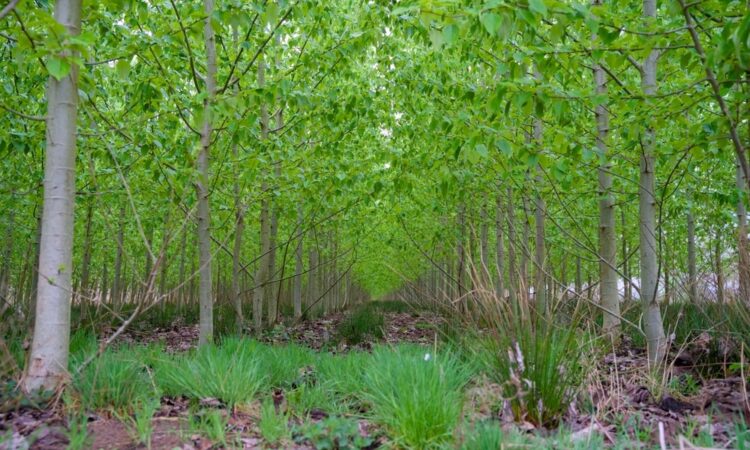
Agroforestry is planting trees together with crops or animals on the same land, intentionally, to increase land productivity and maintain sustainability. It’s not just silly tree planting, it’s strategic. Farmers integrate trees into their fields or pastures in manners that benefit crops, livestock, and the land itself. This is a step past traditional farming that tends to clear trees. Agroforestry is distinctive in that it integrates food production and forest-like characteristics, potentially reducing carbon in the atmosphere.
Agroforestry has emerged as one of the biggest opportunities for agriculture to combat climate change. Its effect on carbon storage can equal or even outperform large-scale reforestation initiatives, but it accomplishes this while still allowing people to cultivate crops or livestock. This is critical, because you can’t put every acre on earth into trees. Agroforestry works on working farms, so it aligns with real-life demands. More interestingly, when trees grow with crops instead of replacing them, they sequester carbon not only in wood but deep in the soil. This is beyond what typical agriculture achieves, as treeless fields miss out on this additional carbon storage.
The carbon-storage potential of agroforestry varies widely. It varies significantly based on factors such as tree species selection, soil conditions, and management practices. Some trees, for instance, grow quickly and absorb a ton of carbon, while others do so more slowly. Fields with luxurious, deep soil can sequester more carbon underground. In the early years of some research, timber plots sequestered as much as three times more carbon than young agroforestry plots, that was in part because those agroforestry plots were never intended to be at full forest density immediately. Agroforestry can be as sparse as a field with only occasional trees, or as dense as a shady canopy, nearing a full forest. Due to this variation, it’s difficult to establish a single average value for carbon storage in agroforestry systems.
Other factors can interfere with carbon sequestration. Fire is a major one. Over a 14-year study period, nearly two-thirds of the agroforestry plots experienced some fire damage, which affected their carbon storage potential. Despite these risks, worldwide, agroforestry is estimated to be capable of sequestering up to 0.31 gigatons of carbon annually. That’s significant, but there are challenges. Most farmers can’t afford to initiate or maintain quality agroforestry. There are data gaps, too — some maps overlook the carbon-densest agroforestry regions, meaning the actual totals may be even greater.
Agroforestry stores more than just carbon. It improves the soil, reduces erosion, and provides additional nutrition or income to communities. For a lot of places, it’s a win-win-win—that’s good for the climate, farmers and local food system.5.
Biodiversity and ecosystem resilience
Agroforestry combines trees, crops and occasionally animals on a single plot of land. This diversity creates multiple layers of vegetation which provide even more habitat niches. Farms that incorporate trees tend to have increased populations of birds, insects, and small mammals. These habitats aren’t just decoration. They provide habitat and nourishment for animals, assist flower pollination, and regulate pests. When trees are beside crops, roots retain soil and retain water in the earth. This makes the land less likely to wash away in big storms. Such hybrid systems have, for example, helped maintain soil health in parts of Africa for centuries. Farmers in tropical Asia and South America practice agroforestry, producing food, wood, and medicine, all at the same time. It’s an approach that keeps the land fertile and prevents native species from disappearing.
Trees have a large role in contributing to farms’ resilience against extreme weather. Their canopies shade intense sun, buffer brutal winds and maintain cooler fields. This is crucial since climate change produces more storms, heat and drought. Tree shade shields crops and livestock from stress. Tree and shrub roots anchor soil during torrential rain, reducing the risk of soil erosion and agricultural damage. The more types of plants farms have, the less they stand to lose to pests or disease. This species diversity contributes to the entire system bouncing back more quickly after storms or other shocks. Studies find that biodiverse farms are more resilient against losing their soil, staying productive, and sequestering carbon for the future.
Agroforestry is more than just about tree planting, it keeps the entire farm humming. Trees shed leaves and branches, which decompose and nourish the ground. This assists soil in retaining water and nutrients. Dead roots pull water up from deep underground, sharing it with crops. Trees provide shade and cover for bees and other beneficial insects as well. These pollinators are required for a lot of crops to develop. Cleaner water is another advantage. When tree roots strain rain, they prevent dirt and agricultural toxins from leaking into streams. It is in these manners that agroforestry enhances multiple services to both humans and nature.
Biodiversity benefits seen in agroforestry systems:
- Higher numbers of native birds and insects on farms
- More varieties of wild plants and trees growing with food crops
- More soil life, such as earthworms and microbes, which develop soil health
- More pollinators, leading to better crop yields
- Less pest outbreaks thanks to natural predators
- Wildlife corridors that link natural forests to farmlands
Biodiversity lost and ecosystems broken lead to less carbon stored in land, worse water, and loss of services people rely on. As much as 30% of species may be lost by 2050, which means maintaining farms that are diverse and resilient is more important than ever. The adoption of agroforestry can be slow. Some farmers are uninformed, underfunded, or unable to reach good markets. Nevertheless, when it is employed, agroforestry has demonstrated obvious benefits for both the environment and human populations. Such systems provide a route to resilient, high-yielding farms that can withstand a shifting climate and assist in sequestering additional carbon.
Climate mitigation and adaptation strategies
Agroforestry is a rare climate mitigation and adaptation strategy that’s been well-demonstrated. This approach mixes trees with crops or livestock on the same land, which both allows farms to pull more carbon from the air while extracting more from their land over time. The numbers are clear: agroforestry can store around 7.2 metric tonnes of carbon per hectare each year. Over 100 years, it might prevent roughly 94 to 343 petagrams of carbon emissions globally. In the U.S., for instance, mundane estimates that up to a third of the country’s annual carbon emissions could be counterbalanced with increased implementation of agroforestry.
These systems do more than sequester carbon. They assist farms to cope with any extreme weather, from long droughts to intense floods. When farms incorporate trees, the over-storey cover shades crops beneath. This reduces heat stress and improves water retention in the soil. The effect is to increase cereal growth and improve yields, even under drought conditions. A field with trees can lose 37.7% less soil and 19.1% less water to runoff than a field with just crops. These gains matter most in regions wrought by drought or floods, but it’s a no-brainer for any farm seeking to maintain productivity as weather becomes more variable.
Mixing agroforestry with other eco-friendly moves can make these gains even more powerful. Taking climate-smart steps, such as intercropping, cover crops, or maintaining living roots in the soil year-round, builds resilient, living soil that captures additional carbon and retains more water. Restoring plant diversity—whether growing crops and trees side-by-side, or planting hedgerows—results in fewer pests, less chemicals, and more reliable harvests. This method applies in regions from the tropics to temperate zones and provides farmers with choices that suit their specific land and requirements.
Agroforestry addresses land loss and soil degradation. In lands like Brazil, where forests have thinned and soil languished, blending the trees back into cropland or pasture can rejuvenate the land and resurrect lost life. When degraded land is converted to agroforestry, it can sequester 3.1 tonnes of carbon per hectare annually, or approximately 11.4 tonnes of CO2. These translate to actual benefits for the climate and the communities who rely on the land. Farmers realize returns in 3-8 years on average, making this a compelling option for those needing to balance present needs with future risks.
Localizing agroforestry solutions globally
Agroforestry systems—combining trees with crops or livestock—can have a huge impact on carbon storage and provide communities more means of cultivating food and make a living. Yet how this works best varies widely by location. Others, such as many African nations, already employ agroforestry at scale. Other areas of the world, such as most of Europe and North America, have yet to do much. These distinctions are important because climate, local customs, and history influence what will and will not work.
There’s no one-size-fits-all thing with adopting agroforestry. Farmers and land managers must tailor their strategy to local weather, soil, and local people’s existing practices. For instance, in tropical regions, fruit and nut trees typically thrive alongside crops and prevent the topsoil from being washed away by intense rains. In drier places, resilient trees such as acacia can provide shadow to crops and conserve moisture in the soil. In other words, in locations with an ancient farming heritage, reintroducing trees—particularly where they had been historically removed—can assist in restoring local soil health and capturing additional carbon. Southeast Asian farms exemplify this, employing mixed plots of bananas, cacao, and timber trees that sustain families while sequestering carbon.
Agroforestry offers co-benefits beyond carbon. Agroforestry systems that blend trees and crops can provide nutrition, fiber, and medicine, all from a single parcel of land. This translates to more choices for farmers and a more secure food system for society. When trees remain on the land, communities begin to view them as farm inputs rather than lumber to harvest and market. This transition can generate local prosperity and nutritional safety. Getting started isn’t always simple. Money’s a real issue. Establishing these systems is more expensive initially, and it can be years before trees begin returning benefits in additional food or timber. Some farmers simply won’t have the savings or credit they need to wait that long.
Putting trees back where they belong, where they’ve been lost, is part of that process. Shade grown coffee or cacao on abandoned old farm land can bring back the wildlife that was driven away and hold 10-50x more carbon than open fields. Those systems sustain local employment, as well — because crops such as coffee are highly marketable and good-paying. To maximize agroforestry’s value, more precise mapping is required. Knowing where trees are and what kinds grow best means we can plan new projects that store the most carbon and help the most people.
| Continent | Agroforestry Adoption Rate | Main Outcomes |
| Africa | High | Food security, biodiversity, carbon |
| South America | Moderate | Coffee/cacao income, carbon |
| Asia | High | Fruit/nut diversity, livelihoods |
| Europe | Low | Opportunity for expansion |
| North America | Low | Soil health, climate benefits |
| Oceania | Moderate | Timber, soil, water conservation |
Practical steps for implementation
Agroforestry in practice is best begun with the people on the ground. Farmers know their land, climate and what thrives. Listening to their needs is a great way to avoid cookie-cutter plans. It requires local expertise to select the appropriate trees, crops, and layouts, as what proves effective in one region might not be applicable elsewhere. When farmers help design new initiatives, they’re more likely to succeed in the long run.
To disseminate effective practices, there are practical steps to implementation that can be gathered from research and practice. These would address not only which trees to plant, but how to manage mixed systems and prevent common pitfalls. When good ideas transition from the lab or field trials into convenient-to-apply manuals, new growers are given a jump start. Including case histories from elsewhere — such as how multitier systems increase yields or contour rows reduce soil loss by almost half—gives people an incentive to experiment.
Widespread embrace is about more than tips. Farmers require education, equipment and consistent assistance to stay current with innovations. Soil health workshops, easy ways to monitor growth, or which trees sequester more carbon may assist. Investment in local communities, from seed banks to farm cooperatives, gives people what they need to maintain new habits even in the face of setbacks.
- Begin with selecting tree species that fit local soils, weather and the farmer’s requirements. Fast-growing trees like leucaena or nitrogen-fixers such as acacia do well in many locations. In humid areas, fruit trees like mango or banana are a good fit whereas drier regions might do better with drought-tolerant varieties.
- Lay it out to work with the shape of the land. On slopes, plant trees on contour lines to slow runoff — this can reduce soil loss by as much as 48%. In flat areas, plant trees in rows or groups to shade crops and to break up wind. Use multitier systems—blending tall trees, shrubs, and grounders—to maximize sunlight and space.
- Intermix trees with crops or livestock for increased profits. Silvopastoral practices, in which trees and livestock share pasture, can reduce methane from cows by 15%-20% and keep land cooler. Tree-crop mixes enable soil to retain more moisture — less risk during droughts, greater food security.
- Install easy means to measure growth and soil quality. Monitor yield variances, soil carbon and water. Research reveals agroforestry can sequester 2–4 Mg C ha−1 year−1 and increase yields up to 30% compared to monocrops.
- Support them with local policies. Where there are laws that support agroforestry or assist with land rights, more farmers can participate. Policy can likewise help repair hard to fix places, such as providing assistance for soil and water work in degraded areas. 1.9 billion ha globally require this assistance.
Agroforestry makes real change when it matches local demand, distributes time-tested methods, and receives backing from across the ecosystem.
Measuring and maximizing carbon sequestration
Precise methods for monitoring carbon in agroforestry are essential if we aim to understand the true carbon storage potential of these ecosystems and how to optimize it. Agroforestry is a great carbon sink, since trees and mixed crops absorb carbon dioxide from the atmosphere and sequester it in roots, trunks, leaves, and soil. Unlike crops that grow and die annually, trees continue to increase in mass. This results in additional carbon being buried for the long-term. For instance, certain native or medicinal plant setups can sequester up to 50 tons of carbon per hectare annually. Yet, without obvious means of quantification, it’s difficult to benchmark outcomes or demonstrate value.
Robust standards for measuring and maximizing carbon sequestration
Standard data collection and reporting methods are needed. Many projects rely on various tools or monitor only certain components of the system, leading to gaps in knowledge. By measuring with shared tools and standards it becomes easier to communicate results, identify trends, and prove the integrity of the data. This all helps not only on local farms, but when engaging groups or governments who care about climate goals. When we all take the same steps, we know what works best and where we need to add support. There’s a serious need to close the knowledge gap by ensuring every project measures the same types of data — such as tree age, species, soil carbon and other important information.
Mapping high-carbon agroforestry systems is yet another. There are some powerful carbon sinks that fall through the cracks of big surveys, like locations that weave endemic or traditional crops with trees. Agroforestry in West Java raised land output by 30%. In Sumatra, farmers using local wisdom and trees witnessed their income increase 20% over old-school farming. Projects that combine local plant knowledge with innovative tracking tools can identify which farms or landscapes sequester the most carbon. These maps aid in targeting assistance, sharing successes, and advocating for policies that support the most effective systems.
For those starting or running agroforestry projects, a simple checklist can help track and boost carbon storage:
- Select tree species with rapid growth and carbon storage rates
- and mix in native, medicinal or food crops to increase biodiversity.
- Take baseline soil and biomass carbon readings before starting
- Use the same datasheets and method for all checks
- Map plots to identify high-carbon areas requiring additional care
- Train local squads to measure and report carbon truths
- Review and update plans based on yearly results
- Share findings with the community to build support
We have research that shows when locals get trained properly, they participate more and contribute powerful worth to measuring and maximizing carbon sinks. This builds long-term buy-in and helps projects hold up over time.
Overcoming barriers and incentivizing adoption
Agroforestry presents an obvious avenue to store additional carbon and optimize land use, yet there are concrete obstacles that many farmers encounter in adopting it. For most, the largest concern is uncertainty whether or not the carbon and income gains will materialize soon enough or at all. The science is clear that trees help pull carbon from the air, but farmers typically don’t have transparent guidelines to assist them in balancing the risks, expenses, and potential returns. The long tree wait – waiting for those trees to mature and deliver that payoff – can be brutal, particularly for smaller farms that thrive on consistent cash flow.
Money is frequently the principal stumbling block. Smallholder farmers may lack either savings or convenient access to loans to make the initial investments required, such as purchasing seedlings or adjusting planting techniques. Even with promising long-term benefits, those first few years may mean lower income because trees are slow to grow. Without some sort of short-term assistance—cash payments, grants, risk-sharing schemes—lots of farmers can’t rationalize the change. Even where intercropping is combined with agroforestry, 98% of farmers experienced an increase in income. That additional revenue is invaluable in the early years. Over time, agroforestry can increase income by $100–300 per hectare just from improved yields, and additional income from timber, fruit or other diversified crops can add $200–2,000 per hectare. Farmers connected to larger value chains experienced income increases of 34% in Sao Tome and Principe. These figures demonstrate the tangible benefit but don’t eliminate the real concern of immediate loss.
Policy and local support can go a long way. A few countries have already begun providing direct incentives to farmers, such as assistance for organic production or payments for carbon storage. These actions demonstrate to farmers that their efforts to protect the land are valued and worth actual dollars. Where the government has ambition, such as a target of 100% organic agriculture, more farmers sign up because the policy provides clarity. Local regulations and NGO or community-group support can assist as well, by providing training, assisting with paperwork, or connecting farmers to markets.
Collaborating is crucial. When governments, nonprofits, and local groups work together, they can assist more farmers in overcoming those initial hurdles. This could involve collaborating to provide loans or grants, developing clear tutorials and training on best practices, or establishing networks for farmers to exchange knowledge. When projects are deployed in many kinds of locations, including challenging ecosystems, it contributes to demonstrating what is effective and what requires modification.
Ways to overcome barriers and encourage agroforestry include:
- Start pilot programs with risk-sharing for early adopters.
- Provide grants or low-interest loans or cash support for the initial years.
- connect farmers to buyers and value chains for improved market access.
- Give clear, step-by-step guides and ongoing training.
- Support intercropping to boost income while trees grow.
- Build strong partnerships between farmers, local groups, and governments.
- Create policies that reward carbon storage or organic practices.
- Publicize real life success stories to propagate trust and faith.